The sound
Before anything else comes the noise of countless balls in motion at once. For most people it fades into a background hum within a few minutes.

Pachinko halls · Tokyo & Osaka
France Gamings is an independent reader's guide to pachinko: how the machines work, how the game grew up, and what five well-known halls actually feel like once you step through the door.
01 · The basics
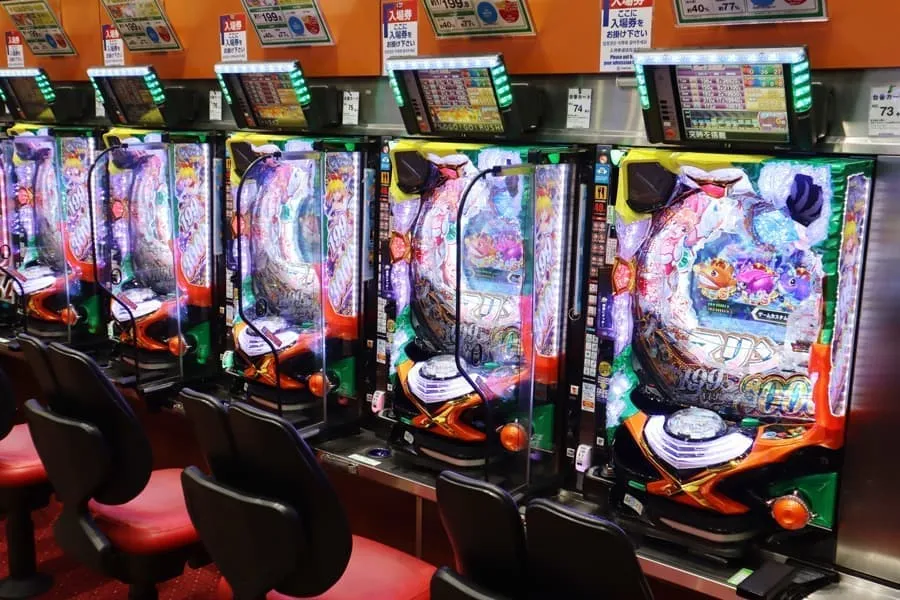
A pachinko machine stands upright like a glass-fronted cabinet. Behind the glass, hundreds of small brass pins are hammered into a board, and a stream of steel balls rains down between them. Your part is modest: send the balls in at the right strength so a few of them find the pockets that matter.
You can see every ball, every bounce and every near miss, yet the route is never repeated. A tiny difference at the top of the board turns into a completely different path at the bottom. Full visibility plus genuine surprise is what keeps eyes on the glass.
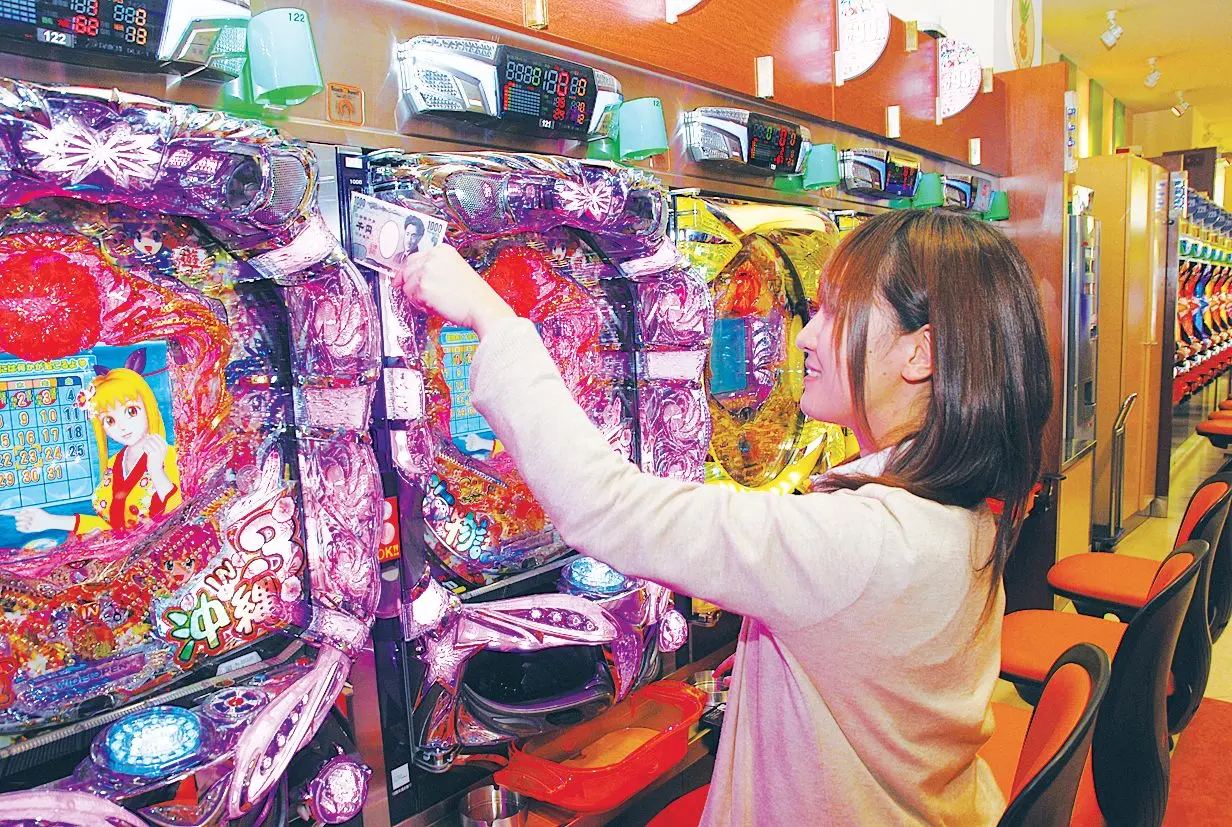
Turning the handle sets how hard the balls are fired. They climb the outer rail, drop into the pin field and scatter. Most pass straight through; the ones that land in a start pocket set the centre display spinning, and a good sequence can open a wider gate for a while.
Chance always has the last word, but regulars pick up small habits: a steadier grip, a slightly softer launch, a feel for how one particular board spreads the balls. It is a very light kind of control, and part of the charm is noticing it at all.
Balls gathered during a visit are counted when you finish and swapped at the counter for prize items. That last step gives a session a clear beginning, middle and end instead of an endless stream of motion.
02 · The craft
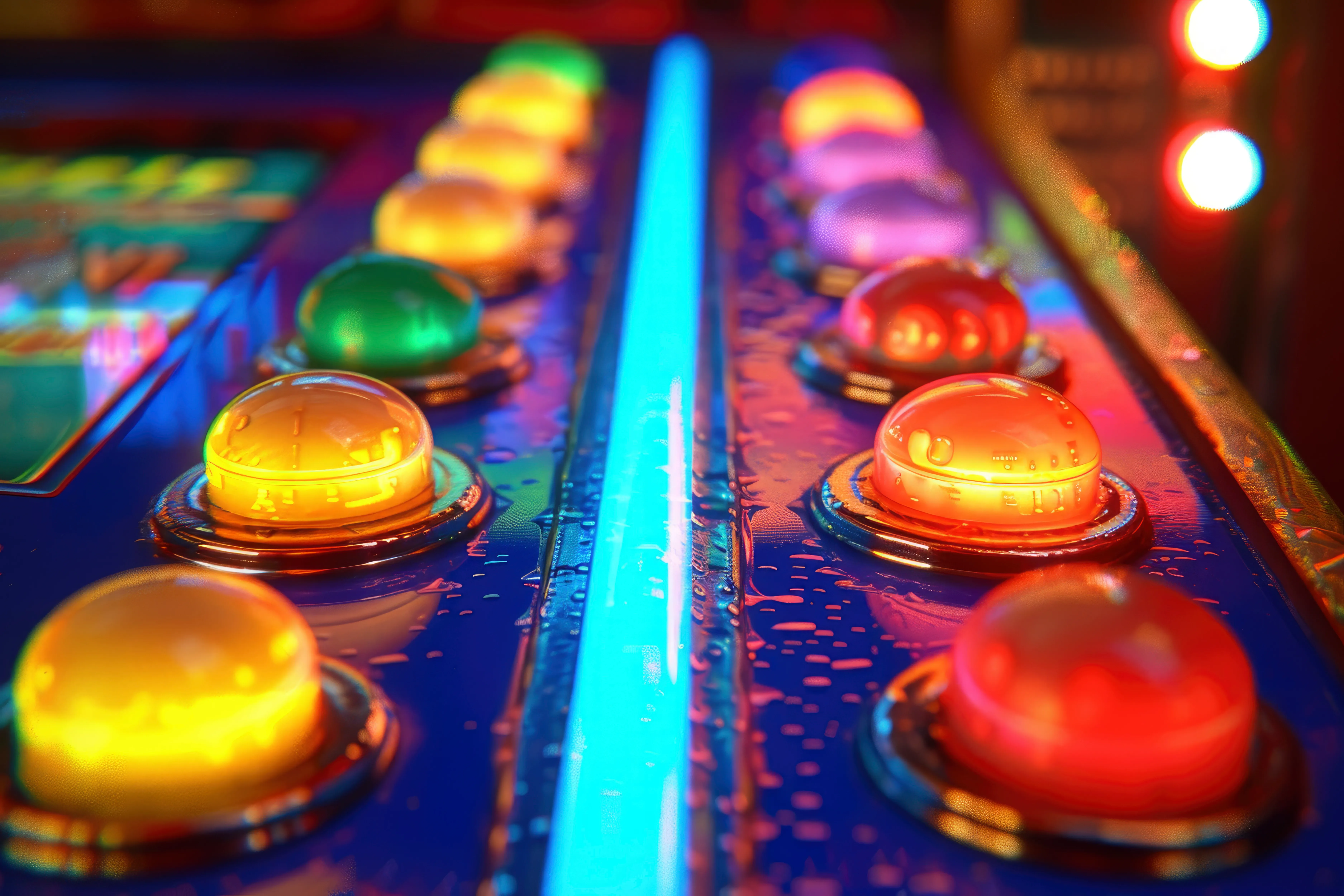
Look closely at a board and the pins stop looking random. They form lanes, funnels and little fences, each angle chosen so the balls drift, bunch and scatter in a particular rhythm. Physics does the rest: gravity, rebound and the occasional ricochet nobody saw coming.
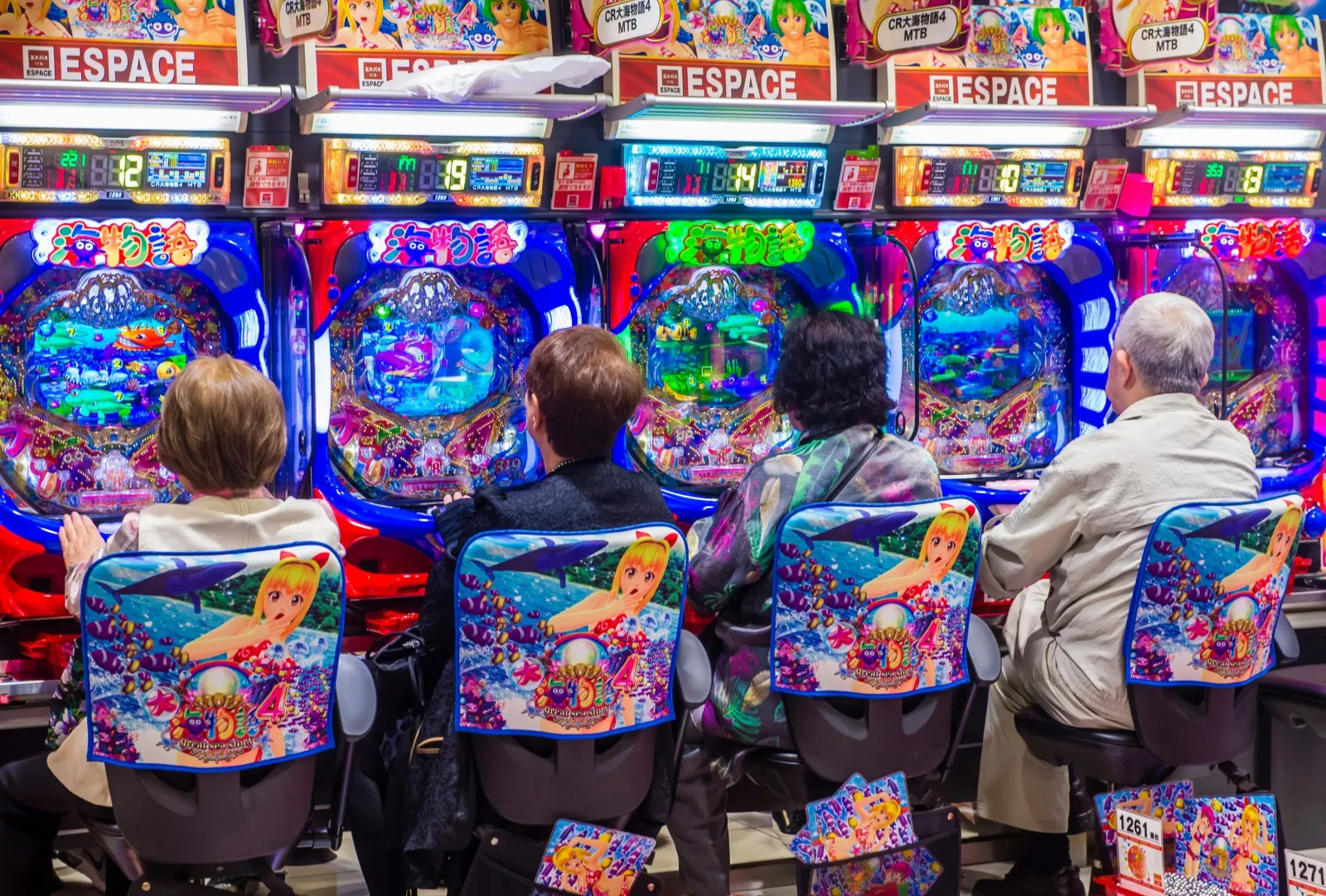
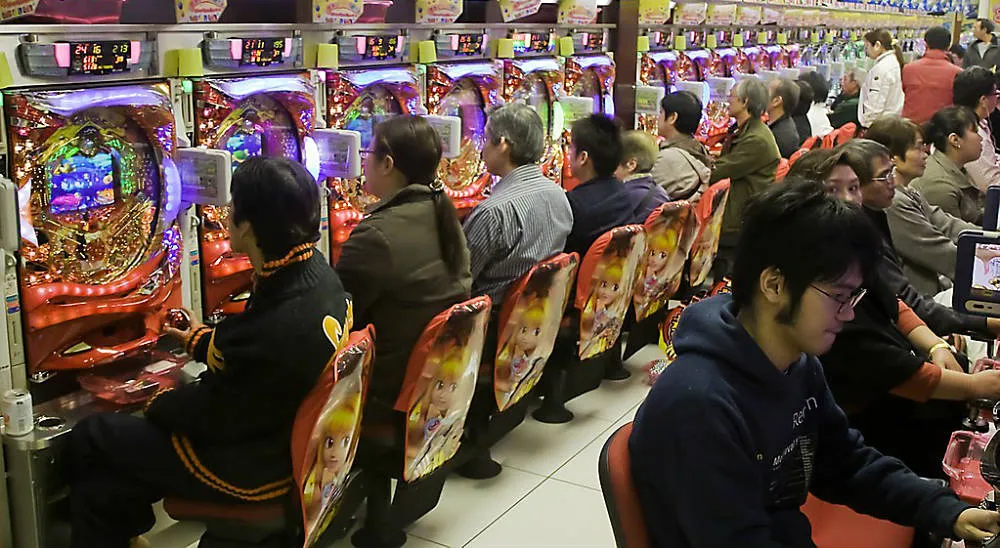
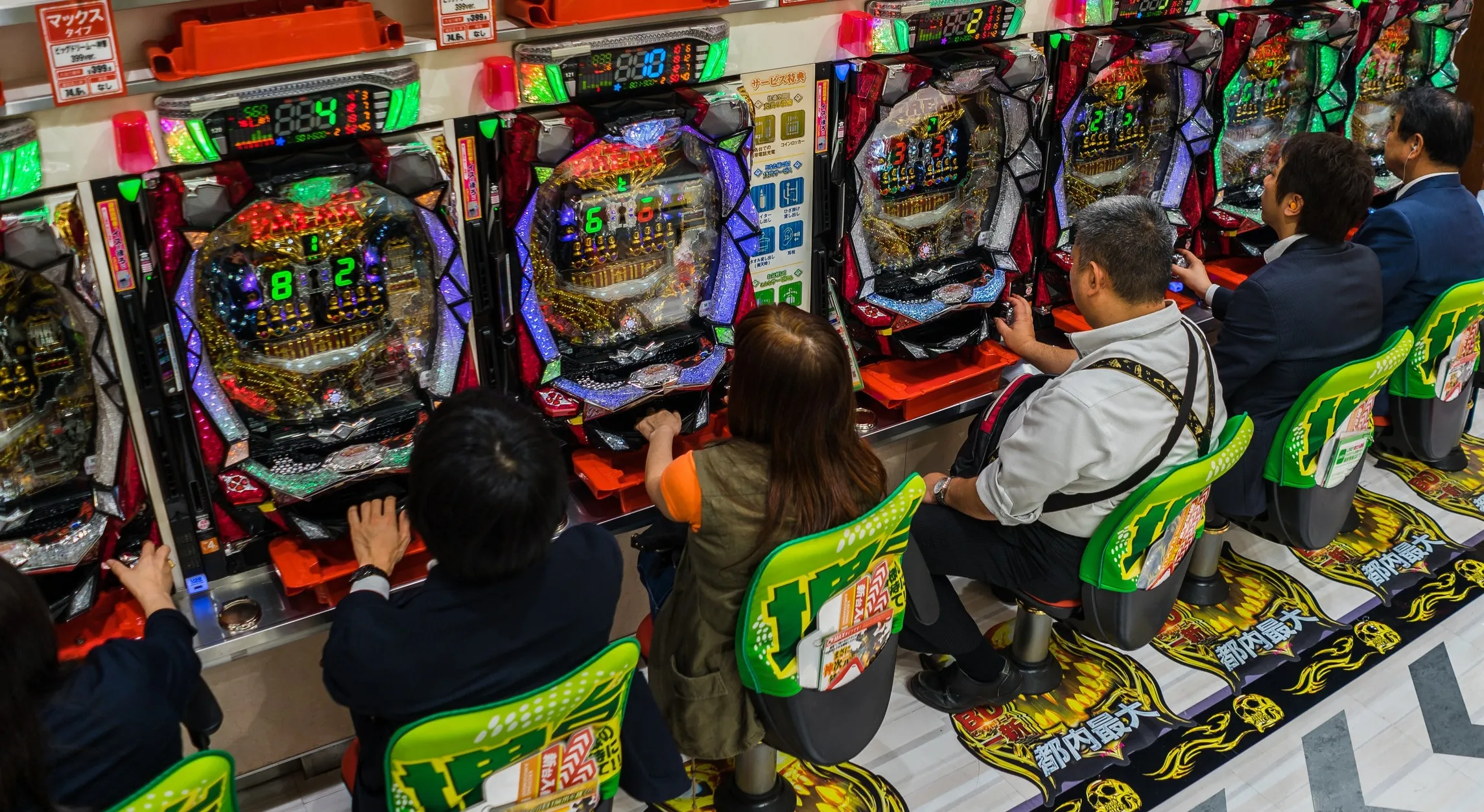
A busy hall is surprisingly communal. People sit shoulder to shoulder, glance across when a neighbour’s screen lights up and share a quiet nod when a long run finally ends. Nobody plays against anyone, yet the room reacts together.
Because every visit ends at the counter, there is a moment where the afternoon adds up. You see the result, trade it in and walk out — a tidy loop that makes the visit feel complete.
The game began with a toy from abroad, but decades of local tinkering gave it its own sound, its own look and its own manners. Today it is unmistakably part of Japanese city life.
03 · Origins
Pachinko did not arrive fully formed. It grew in stages, and each stage added a little more noise, light and engineering.
The first versions were simple pin boards inspired by Western bagatelle games. They were sold as amusements, often for children, and a round was over in seconds.
Over the following decades the boards turned vertical, the pins multiplied, and springs, gates and later electric parts arrived. Dedicated halls began to open along shopping streets.
As cities expanded in the post-war years, pachinko became a mainstream way to unwind. Halls grew bigger, louder and brighter, and the machines picked up the screens and themes visitors know today.
04 · The feel
From the doorway, a hall can look like any arcade. Sit down and the difference is obvious: the game is built from real objects. Steel balls fall, click against brass, roll along rails and drop through gates you can watch opening and closing. The centre screen adds drama, but the physical cascade is what you actually follow.
There is no single button that decides everything. You set the pace with the handle, track each ball as long as you like and react to what the board does. It feels closer to watching water find its way down a hillside than to tapping at a phone.
Balls in, balls down, a few balls caught. The loop is tiny, but the pin layout, the moving parts and the timing of the display keep it from ever settling into a pattern you can predict.
05 · Today
Current machines add bright LCD screens, licensed themes, voice clips, moving figures and layered bonus modes. A single cabinet can carry a whole anime storyline across its display.
Underneath, the bones are unchanged: an upright board, a field of pins, a launch handle and a stream of steel. The new features sit on top of the old mechanism rather than replacing it, which is why a machine built this year still feels recognisably like pachinko.
06 · The halls
We chose five well-known venues across Tokyo and Osaka and wrote about each one the way you would describe it to a friend: how it looks, how it sounds and who it suits.
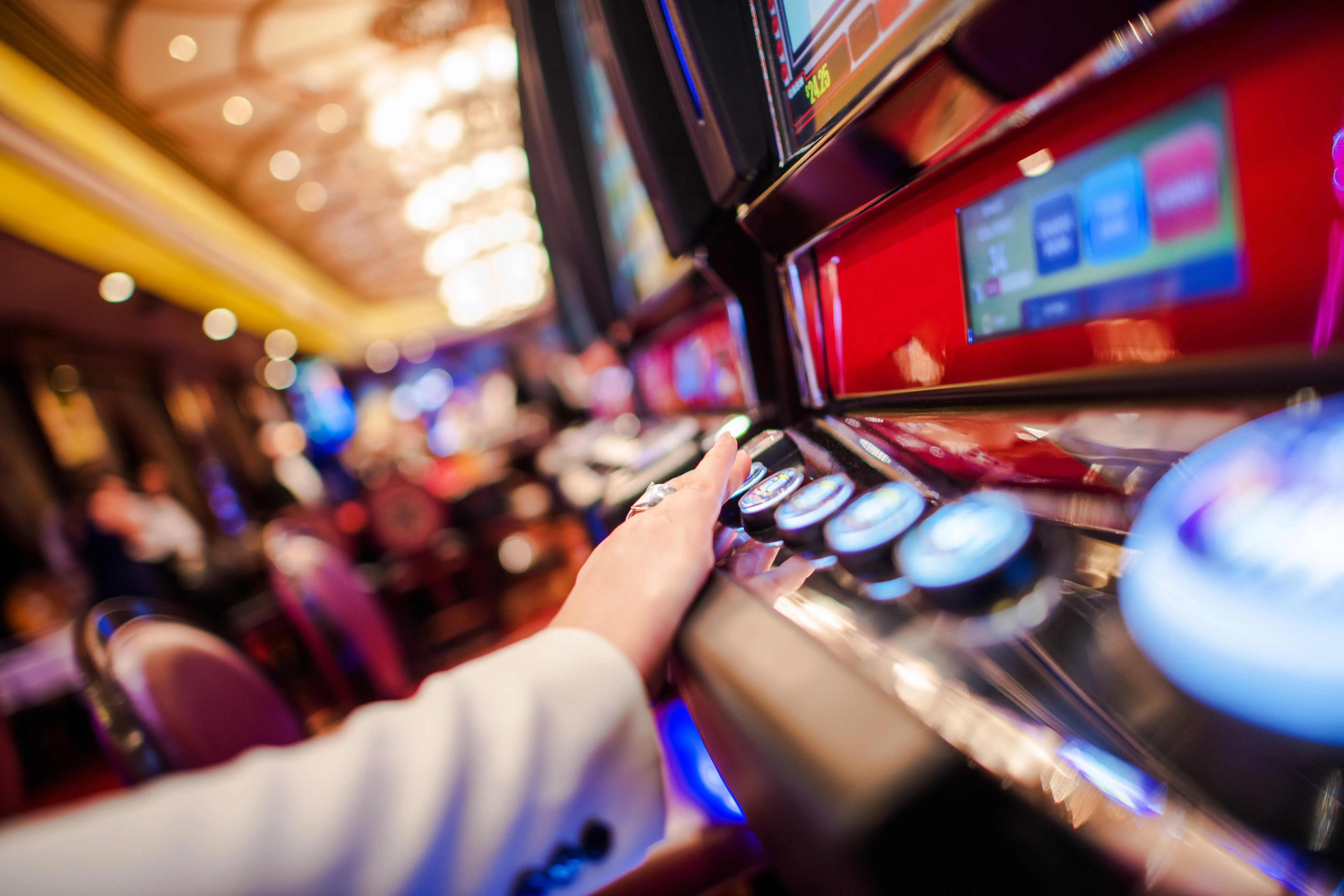 TokyoIsland AkihabaraCrisp lighting, tidy rows and upbeat electric-town energy.Read the visit →
 OsakaMaruhan NambaSoft light, moderate sound and an unhurried pace.Read the visit →
 TokyoMaruhan Shinjuku TohoHuge screens, bold effects and a fast-moving crowd.Read the visit →
 OsakaMaruhan ShinsekaiRetro neighbourhood charm and a gentle rhythm.Read the visit →
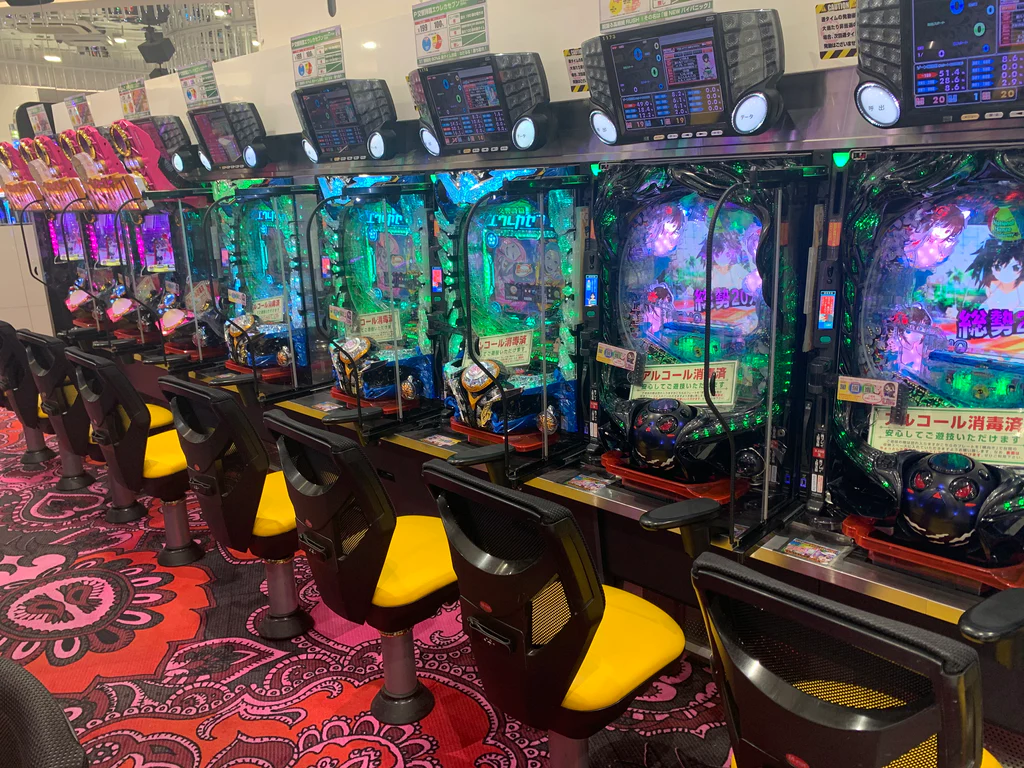 TokyoShinjuku Cosmos PachinkoAlways on, always lit, easy to drop into.Read the visit →
07 · First visit
Before anything else comes the noise of countless balls in motion at once. For most people it fades into a background hum within a few minutes.
Once the handle is set, the game falls into a steady pulse. It is easier to relax into than many first-timers expect.
Quiet rules apply: keep to your own seat, never touch a stranger's tray and follow staff directions at the counter.
08 · The bigger picture
Part entertainment, part industry, part neighbourhood routine.
Every session follows the same arc: balls are played, counted and exchanged for prize items at the counter. That simple chain links each player to a much larger structure that keeps the halls running.
Behind the rows are machine designers, board builders, maintenance crews, counter staff and suppliers of everything from seating to lighting. One neighbourhood hall quietly depends on dozens of trades.
Socially, halls work as everyday meeting points. Office workers stop by after hours, older regulars come in the morning, students drift in at weekends. Over time, familiar faces turn into a loose kind of community.
Seen from a distance, pachinko is less a single game than an ecosystem, and that blend of play, work and habit goes a long way to explaining why it has lasted so long.
Adults only. Halls in Japan admit visitors aged 18 and over; younger guests cannot enter or take part in any activity. France Gamings is an information site and does not run games of any kind.